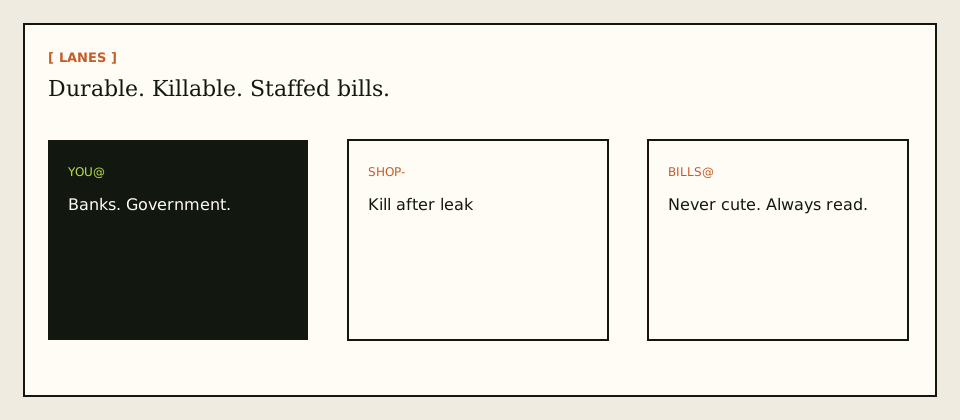
A personal email alias naming system is a written pattern you can type at checkout and kill after a leak. It is not catch-all FORWARD, not a drawer of unused local-parts, and not leftover registrar MX. Durable you@ for banks. Killable shop-vendor@ for merchants. Staffed bills@ you will actually open. HOLD the rest. Count names against Free’s three aliases before Black Friday. Exclusive MailerZ MX so receipts hit the map you designed.
Quick answer for personal email alias naming
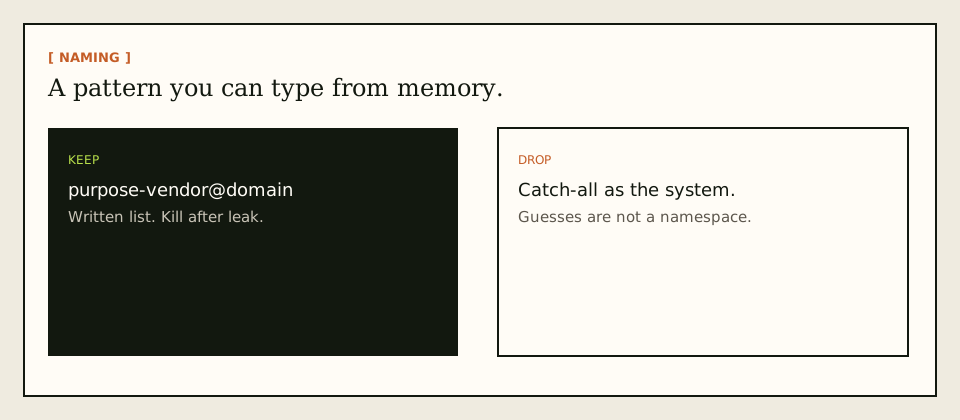
Pick one syntax and write it down. Purpose plus vendor, or a short lane prefix. Product path: email forwarding, aliases and catch-all, send and reply. Plus-addressing lives in IETF RFC 5233 — Sieve Email Filtering: Subaddress Extension and Google Gmail Help — Using an address alias (plus addressing). MX physics is IETF RFC 5321 — Simple Mail Transfer Protocol. Names are IETF RFC 1035 — Domain names.
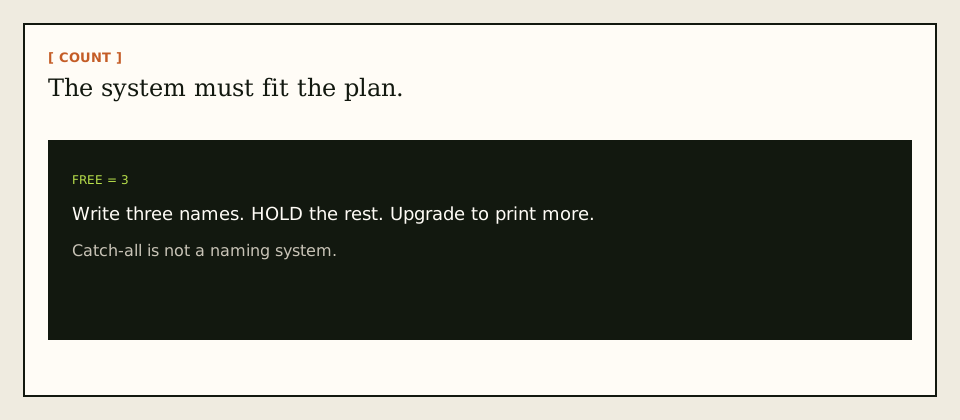
Confirm MailerZ pricing. Free is one domain, three aliases, 14-day store, send-as disabled, SMTP and API disabled. Solo is $40 per year when the list or send-as grows. Starter is $8 or $80. Business is $19 or $190. Agency is $39 or $390. A naming system that needs twenty live strings is a paid plan, not a catch-all. No inbox SLA. Not SOC 2.
HN threads about personal domains are mood, not MX; see that discussion if you want the culture. Helpful pages still need exclusive MX: people-first content.
The user problem and the decision criteria
People invent shop1@, amazon@, and a random hex on the same Saturday, then cannot remember which string they typed at returns. The useful system is boring and short. The useless system is infinite names you will not probe.
| Question | If yes | If no |
|---|---|---|
| Can you type it at a noisy desk? | Keep the pattern. | Shorten or drop the vendor. |
| Will you kill it after a leak? | Use a shop- prefix. | Use durable you@ instead. |
| More than three live names? | Quote Solo or Starter. | Free can hold the system. |
| Catch-all as “the system”? | Guesses are not names. | HOLD unknown. |
| Leftover registrar MX? | Receipts miss the map. | You can probe names. |
Technical mail flow
Naming does not change SMTP. The shop resolves MX, offers the envelope, and stops after a 250. MailerZ matches the local-part you created. A clever name that does not exist is HOLD or a bounce, not a system. Leftover MX means some receipts never reach the hop that knows your pattern.
Dots and hyphens are local-part taste. Some sites lowercase. Some strip plus tags. Your owned-domain hyphen usually survives. Do not put a plus in a printed shop alias if that site rejects plus. Google Gmail Help — Using an address alias (plus addressing) is Gmail-side, not a domain you own.
Self-send hides leftover MX. Foreign-probe each new name before you type it at a merchant.
Step-by-step setup and decision path
Write three lanes on paper
Durable identity, killable commerce, staffed bills. That is a system even on Free.
Pick one syntax
shop-brand or brand.shop. Not both. Hyphens beat camelCase at a phone keyboard.
Cut exclusive MX if you have not
Delete leftover registrar and builder email MX. Query two resolvers.
Create only this month’s names
Probe each. Leave unused names uncreated so HOLD stays clean.
Store the list where you will look
Password manager note or a paper card. Not a Slack scroll.
Kill on leak, remap on life change
Disable shop-brand@. Keep you@ and bills@. Upgrade when the live list exceeds the plan.
Failure modes and proof
| What you see | Likely cause | Proof |
|---|---|---|
| Cannot remember the string at returns | Random hex or two syntaxes | Rewrite to one prefix |
| Fourth name missing | Free cap | Quote Solo or collapse two shops |
| Spam to random words | Catch-all FORWARD | HOLD unknown |
| No receipt, empty history | Leftover MX or typo | Two resolvers; envelope name |
| 250 empty Gmail | Filter or HOLD typo | Recovery |
| Site rejects the local-part | Plus tag or “alias” heuristic | Use durable you@ for that vendor |
Proof is a one-page pattern, exclusive MX, probed names, and a kill you have practiced. Families: kids get named aliases, not catch-all. Do not mix a spouse’s joke local-part into bills@.
MailerZ workflow and product boundary
MailerZ is inbound MX plus authenticated SMTP. Envelope SRS only. Header From never rewritten. It is not IMAP, not a mask network, not an open relay. Unhosted SMTP is 550 / 550 5.7.1.
HOLD or reject on Free. Three aliases. 14-day store. Send-as, SMTP, and API disabled. Solo $40 per year. Starter $8 or $80. Business $19 or $190. Agency $39 or $390. Confirm pricing. The naming system lives in your list. The product enforces the cap. Limits are not an inbox SLA. No SOC 2.
Features describe routing. They do not invent local-parts for you. Paid plans buy more names, not a prettier syntax.
Cost, alternatives, and trade-offs
| Choice | What you get | What you give up |
|---|---|---|
| Three-lane system on Free | A rememberable map | One alias per shop |
| Solo or Starter | More live names | Nothing if the list is real |
| Catch-all as namespace | Every guess | A quiet Gmail |
| Plus tags only | Zero DNS | Sites that reject plus |
| Random hex per checkout | Hard to guess | Returns without the password manager |
Time is a line item. A boring prefix costs less than a Saturday reconstructing checkout emails. Leftover MX costs more than Solo. A Free-plan send-as argument still costs more than the upgrade.
Three lanes that do not mix
Durable you@ or firstname@ is for banks, government, and people who will mail you for a decade. Do not put a joke or a year in it. Do not recycle it as a shop tag.
Killable commerce uses a prefix you will disable: shop-brand@. When that merchant leaks, the prefix tells you which string to kill. A shared shop@ for low-risk stores is valid on Free if you accept one blast radius for many checkouts.
Staffed bills@ is for power, phone, and rent. It must be opened. Cute names here are how a disconnect notice sits next to a coupon. Two household destinations on bills@ are one hop, two stores. Write who pays.
Travel can sit on travel@ rather than twenty airline names. Gate changes are time-sensitive. A naming system that fragments travel is a missed flight, not a privacy win.
Security@ and hello@ are business lanes. Do not put them on a personal joke domain you will abandon. If the personal domain is also the company, treat public strings as durable and shops as killable on a second prefix.
Syntax you can type at a desk
Hyphens survive more forms than camelCase. Dots sometimes become plus-like in sloppy parsers. Avoid spaces, unicode flourishes, and trailing numbers you will increment forever (shop1, shop2).
Vendor slugs should match the brand you can spell: shop-ikea not shop-ik3a. If two brands collide, add a short year once: shop-acme24. Do not add the year to durable you@.
Length: if it wraps on a phone keyboard, it is too long. purpose-vendor is enough. purpose-vendor-country is how you forget the country code at returns.
Case is not a feature. Treat local-parts as lowercase. If a form uppercases, your map still matches if you created lowercase. Do not create Shop-Brand and shop-brand as two aliases.
Subaddress plus tags can sit behind a durable name you already own: you+shop@gmail is not this system. you+shop@yourdomain may work if the destination and the hop honor plus. Many merchants reject plus. Prefer a real local-part on your domain.
Plus tags versus owned names
Plus-addressing is a filter trick inside one mailbox. An owned local-part is a public string you can disable without changing you@. Sites that block disposable domains sometimes still accept your TLD. Sites that block plus still accept shop-brand@yourdomain.
Do not run both systems for the same merchant. You will not remember which checkout used plus. Pick owned names for new merchants. Leave old plus tags in Gmail filters until they die.
Masks and Hide My Email are another class. They are easy and vendor-tied. Your naming system survives when you leave that ecosystem. Quote those products live if one-tap is the job. Do not dual-publish MX to look like a mask.
The written list
The system is the sheet: lane, pattern, live names, kill date, destination. Without the sheet you will re-give you@ at the next noisy checkout.
Password managers can store the alias next to the merchant login. That is the lookup at returns. A paper card in a wallet works if you hate apps. Slack is a bad sheet.
Review quarterly. Kill unused shop names so you stay under the plan cap. Probe after each new name. Re-query MX after any registrar click. Night operators who add Google MX “as backup” split receipts away from the names you designed.
Families share a domain only with named aliases and HOLD. A child’s catch-all is not a naming system. Offboard a roommate by remapping destinations, not by inventing a new syntax.
Send-as is rare for shop names. You receive receipts. You send from Gmail as you@. Free has no send-as. Do not mix a 550 5.7.1 into a naming ticket.
Two-factor on Gmail. HOLD review. Open a held typo for a real receipt and expect an audit row. Not SOC 2. Legal hold is an export, not leftover MX.
IPv6 failures are host problems after exclusive names exist. Do not republish registrar mail because AAAA failed. Fix the host. History shows whether we accepted the envelope.
If a second person needs the order, send this page plus leftover MX troubleshooting. Three lanes. One syntax. Exclusive MX. Probe. Kill on leak. That order prevents a drawer of unused local-parts.
Paid plans do not change the physics. Solo, Starter, Business, Agency still need one inbound owner and a sheet. They buy more names. They do not buy memory.
Registrar republish after a website save steals the next receipt. Re-query. A naming system on the wrong zone is theater.
The artifacts that close personal email alias naming are a one-page pattern, a live list that fits the plan, two resolver listings, and a kill you have practiced. Everything else is improvisation at checkout. Improvisation is how you@ ends up on every merchant again.
Households and roommates
A shared lastname.com is still one naming system. Each adult gets a durable firstname@. Bills@ maps to the people who pay. Kids get named school@ or firstname@, never catch-all. A roommate who will leave in a year should not live in you@. Give them a killable room-alex@ and remap when they go.
Do not invent a second syntax for the household “because it is family.” Two syntaxes is how returns fail. One prefix, many first names.
Offboard is a destination remap and a kill, not a new public string on the website. The internet remembers firstname@lastname.com. It does not attend your lease end.
If two people shop, do not share one shop@ password on Gmail. Map two destinations or two shop prefixes. Shared mailbox passwords are how a leftover login reads receipts after someone moves out.
HOLD still applies. Guesses of baby names and pet names will arrive if you FORWARD unknowns. Named aliases only for strings you printed on a form.
Agencies running a client’s personal domain by mistake should stop. Personal naming systems are not client hello@. Separate zones. Separate sheets.
Anti-patterns that look clever
Sequential shop1@ through shop99@ is a cap trap and a memory trap. You will not know which number was the shoe store.
Date stamps in every local-part (shop-nike-2026-03-11) look like audit logs and fail at a phone keyboard. Put the date on the sheet, not in the address.
Hashing the merchant name into eight hex characters is fine for a password manager and fatal at a returns desk without the phone. If you cannot speak it, it is not this system.
Using the same local-part on two domains “for consistency” without exclusive MX on both is leftover MX on one of them. Per-zone MX. Per-zone sheet.
Printing the naming system on a public blog post with your real domain and twenty live shop names is a directory for guessers. Teach the pattern. Do not publish the live list.
Catch-all FORWARD “until I name them” is how the system never starts. HOLD until the alias exists.
Mixing security@ and shop- prefixes on a domain you will sell is how the next owner inherits your disclosure path. Durable public strings stay if the domain stays. Kill commerce names before transfer.
Night cuts that add Google MX “so Gmail looks native” destroy the naming system’s hop. Gmail is the destination, not the MX. Re-query after registrar saves.
Weekend improvisation—a new hex at a hotel checkout—should be added to the sheet the same night or it will become you@ again on the next booking.
Worked scenarios for a personal naming system
Three lanes: durable you@ for humans who must remember you, killable shop-vendor@ for checkouts, staffed bills@ for money. HOLD unknown. Exclusive MX. Count names against Free's three aliases before you print. That is a system. Catch-all FORWARD is not a namespace.
A leaked shop-oldstore@ gets disabled. you@ stays. bills@ stays. The point of killable prefixes is that a dump does not rename your life. Create shop-newstore@ if you still need that vendor. Update the vendor the same hour.
Someone uses plus-tags at Gmail as the only 'system.' You cannot disable a plus tag without changing the mailbox. Move public checkouts onto MailerZ local-parts you can kill.
Twenty invented names on Free. The twenty-first checkout fails because the cap is three. Write the pattern on paper. Create only this month's names. Quote /pricing before the closet of prefixes.
Catch-all FORWARD 'to see who still has old addresses.' You will see the internet. HOLD. Map what you still use. Long-term ownership includes forgetting on purpose.
Practice and anti-patterns in personal naming
Practice: one pattern you can type from memory. Anti-pattern: random strings you will mistype at a desk.
Practice: killable shop prefixes. Anti-pattern: hello@ at every checkout.
Practice: HOLD unknown. Anti-pattern: catch-all as the system.
Practice: disable leaked strings. Anti-pattern: flapping MX because a shop dumped a list.
Practice: foreign-probe each new name. Anti-pattern: inventing twenty and testing none.
Practice: exclusive MX. Anti-pattern: leftover registrar email as a second namespace.
Operator closeout for the naming sheet
Closeout is the written pattern, the live names, lane of each, destination, HOLD on, exclusive MX listings, probe IDs, alias count versus plan.
Password manager stores the shop strings you actually used. Memory is how you reuse hello@ at the next checkout.
Website and profiles crawled so durable you@ is what you printed. Shop names stay out of the footer.
Link /aliases-catch-all and /email-forwarding. Naming is local-parts. MX is exclusive. Different jobs.
Free three-alias cap is in the closeout so future you does not promise a closet.
Edge cases in personal alias design
A partner shares lastname.com. Agree lanes so shop- prefixes do not collide. Shared catch-all is a household leak.
Government and bank portals hate changing strings. Those are durable or staffed bills@, not killable shop names. Do not rotate a bank login for sport.
A vendor forbids plus-looking local-parts or long prefixes. Keep a short killable name. The pattern flexes. The lanes do not merge.
You want stealth. A personal domain is identifiable. Naming cannot unsay lastname.com. Buy a mask for that job.
Send-as from a shop prefix after a leak. Rotate SMTP if that From could send. Disable inbound on the old string. Order matters.
Legal name change. Add a durable string. Do not rush a domain drop unless you mean to. Prefixes can move; leftover MX cannot survive sloppiness.
People who must type the pattern
You at a checkout desk, a deputy who can disable a leak, and anyone who still prints your email on paper. If the deputy cannot find the sheet, the leak becomes a domain panic.
Family members who invent names in a shared panel break the system. List not-yet people. Seats are limited. Free is one seat.
Shops do not need your naming philosophy. They need a string. You need to remember which lane it was.
Future you in five years is the operator. Syntax you can type beats clever uniqueness you will mistype.
Proof packet for a naming system
Pattern on paper, live aliases by lane, HOLD on, exclusive MX, foreign probes, cap versus /pricing, disable drill dated this year.
No catch-all FORWARD unless a written exception exists. No leftover builder MX.
Shop names not on the public website. Durable name is what humans remember.
Plus-tag migration plan if you still have public plus addresses.
Author: MailerZ editorial, Secuno LLC. Review when dumps, family, or pricing change.
Extended narrative of three lanes at a checkout
You are at a desk buying a tool. The pattern says shop-toolname@, not you@. You type it, create it if this month's cap allows, pay, and file the string in the password manager. Next year that shop dumps a list. You disable shop-toolname@. you@ and bills@ never change. That is a personal email alias naming system when it is used, not when it is a cute diagram.
The failure story is hello@ at every checkout because it was easier. Then a dump is your life. Lanes exist so ease does not win. Free's three aliases force priority: durable, bills, one shop—or upgrade and keep the pattern.
Catch-all FORWARD feels like a system because every name 'works.' It is the opposite of a system. HOLD is how the namespace stays finite. Finite is the point.
Write the pattern where future you will look. A note in the password manager beats a blog you will not reread at a register.
Exclusive MX still matters. A perfect naming sheet with leftover registrar MX is two namespaces, one of which you do not control.
FAQ
What is the safest way to handle personal email alias naming?
Write one pattern you can type from memory: durable you@, killable shop-vendor@, staffed bills@. HOLD unknown local-parts. Exclusive MX. Count names against Free’s three aliases before you print. Disable a leaked string. Do not treat catch-all as the namespace.
Does this require a new mailbox?
No. MailerZ is not IMAP. Gmail or Outlook stays the store. The naming system is the map, not a new inbox. Buy hosting only if you want folders on the domain.
Will it work with Gmail or Outlook?
Inbound works when exclusive MX and the named alias exist. Self-send can hide leftover registrar MX. Checkout receipts will not self-send. Free has no send-as.
What DNS records are involved?
One exclusive MailerZ MX set, verification TXT, leftover builder or registrar email MX deleted. SPF, DKIM, and DMARC when you send. Naming is local-parts, not MX. See RFC 5321 and RFC 5233.
What should I test before production?
Write the pattern on paper. Create only the names you will use this month. Foreign-probe each. Then use that string at checkout. Do not invent twenty names on Free.
Key takeaways
- Personal email alias naming is a written pattern, not catch-all FORWARD.
- Three lanes: durable you@, killable shop-, staffed bills@.
- One syntax. Hyphens. Lowercase. No random hex at returns.
- Free is three aliases. The system must fit the plan.
- Probe each new name. Exclusive MX. Leftover registrar mail splits receipts.
- Plus tags are not a domain you own. Masks are another class.
- Kill the leaked string. Keep the domain.
- Solo $40/yr for more names or send-as. Confirm /pricing. Not SOC 2.
Conclusion and next action
If you want a personal email alias naming system, write three lanes, pick one syntax, cut exclusive MX, and create only the names you will probe this month. MailerZ can match local-parts it has. It cannot remember a hex you invented in a checkout line. Start free, fit three names, upgrade when the sheet is real.
Ready to stop inventing names at checkout
Start free with one domain and three named lanes.
Inbound on Free. Solo when the list grows. Sign in if the domain is already there.
Review when a vendor leaks, and quarterly otherwise. Author: MailerZ editorial, Secuno LLC.