An agency email migration runbook is the same sequence on every client domain: access to authoritative NS, alias sheet, MailerZ map, TTL wait, exclusive MX, probes, then optional send-as. Repeatability is what keeps you from inventing a new religion per brand. Dual MX is not your safety story. The screenshot of the old set is. Quote plan limits before you promise a hundred aliases on Free.
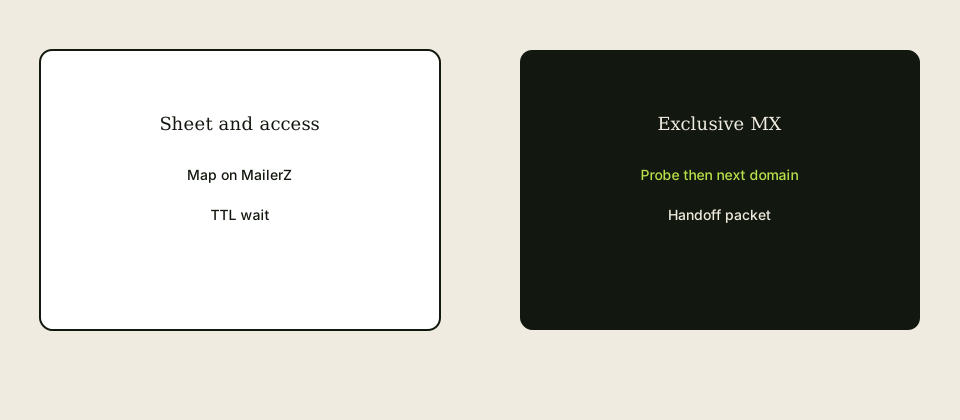
Quick answer for agency email migration runbook
Agencies fail multi-domain moves when they copy MX from memory. Each zone has leftovers, null MX, or a Google leftover from a trial.
DNS language is still RFC 1035. Your runbook should name the panel that is authoritative, not “the registrar, probably.”
Prep can be parallel. Production cuts should be serial enough that history is readable. A pile of 550s from three brands at once is how you miss a leftover.
Agency plan exists for a reason. Quote pricing. Do not stack ten clients on a Solo story you invented.
Handoff includes the sheet, the screenshot, the probe IDs, and who can edit NS. Without that, you will be paged for a domain you no longer administer.
Soft CTA after the first successful rehearsal: start free, prove the sequence, then bring client zones.
Authoritative mail transport is defined in IETF RFC 1035 — Domain names. Product path: migration planner, MailerZ documentation, and delivery recovery. Confirm Agency and Solo ceilings on MailerZ pricing (Solo is $40 per year; Free keeps send-as, SMTP, and API Off). After cutover, held and inbound copies show in Mail Box.
User problem and decision criteria
Decision criteria: NS access in writing, sheet complete, plan limits, TTL wait on the calendar, rollback owner, probe mailbox that is not the client’s self-send.
Criteria that do not belong: dual MX per client, catch-all FORWARD as a standard, inboxing SLAs, SOC 2 theater.
If the client will not give NS access, you are not migrating email. You are writing instructions. Price that differently.
If the client wants Microsoft 365 and aliases, say which product owns MX. You cannot dual-own.
If marketing wants the same SMTP for newsletters, split the statement of work.
If a client domain is in dispute, stop. Migrations do not settle ownership.
If your staff uses one shared MailerZ login, you will lose audit. Prefer seats the plan allows. Do not invent unlimited seats.
If you skip HOLD because “clients hate it,” you will clean junk on retainer forever.
Technical mail flow
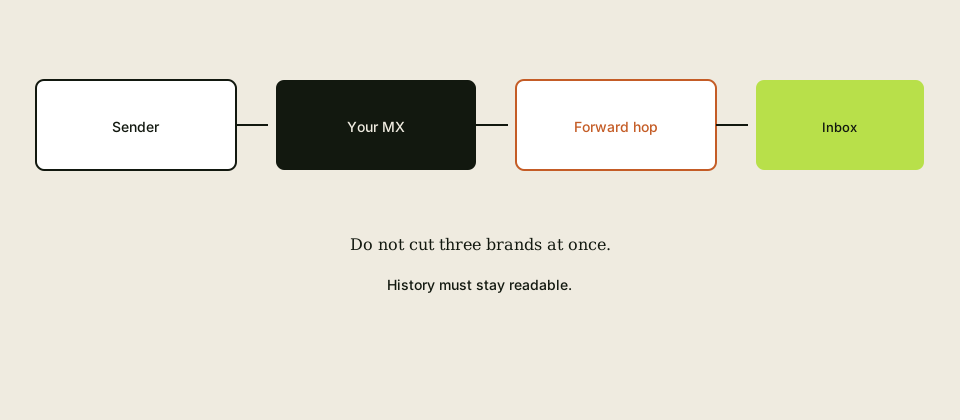
Per domain: access → sheet → map → TTL → exclusive MX → probe → optional SMTP → handoff note.
Do not share MX hostnames from memory. Copy from the current dashboard.
Incidents use the same missing-mail runbook. Do not invent a third sequence.
Offboarding is a later article. Today, keep credentials and screenshots in the client file.
Tools and leftover MX checks scale. Use them every time, even on “simple” sites.
Step-by-step setup / decision path
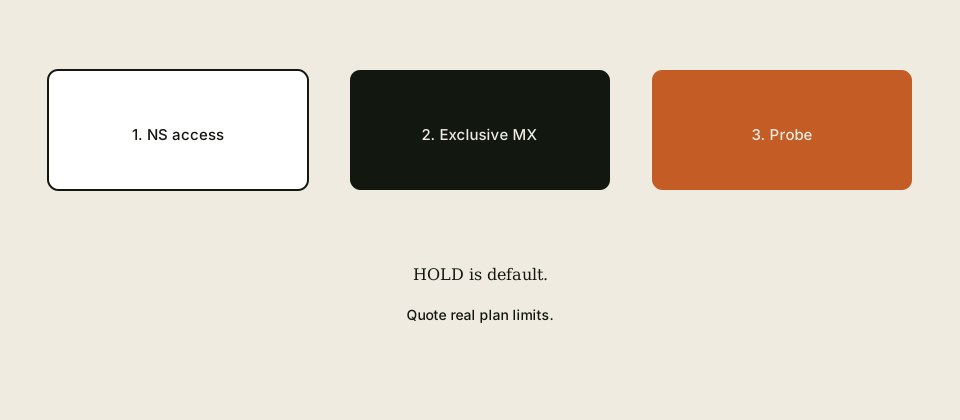
- Kickoff: NS proof, inbox owners, alias export, plan quote.
- Build the sheet. Mark dead addresses.
- Map live aliases on MailerZ. HOLD on.
- Lower TTL. Wait.
- Cut exclusive MX on one domain. Probe.
- Only then schedule the next domain.
- Enable send-as if in scope, from dashboard values.
- Handoff packet: sheet, screenshots, probe IDs, who edits DNS.
A rehearsal domain keeps new hires from learning on a restaurant’s reservation address.
If a client insists on same-day multi-domain cuts, staff accordingly and still serialize the actual MX publishes.
Refuse to store SMTP secrets in the ticket thread. Dashboard and a password manager, not Slack.
Failure modes and proof
Memory MX: wrong host. Proof: dashboard differs.
Parallel production cuts: unreadable history. Proof: three brands in one hour.
No NS access: records in the void. Proof: public NS.
Standard FORWARD: junk retainers. Proof: catch-all mail.
Free plan for a portfolio: limits. Proof: alias count.
No handoff: you own it forever. Proof: the 2 a.m. page.
Dual MX “agency best practice”: lost mail. Proof: two owners.
Self-send QA: false green. Proof: customer misses.
Newsletter on reply SMTP: caps. Proof: hourly limit.
Missing rollback screenshot: stuck. Proof: no old set.
Shared staff password: blame fog. Proof: no seat.
Invented compliance badge in the SOW: legal. Remove it.
MailerZ workflow and product boundary
MailerZ is custom-domain aliasing and forwarding with optional paid send-as. Secuno LLC operates mailerz.net. The app is mail.mailerz.net. Not Workspace, not IMAP, not an open relay, not a campaign ESP.
Envelope SRS only. Header From, Subject, Date, Message-ID, body, and MIME stay intact. Exclusive MX. Hold unknown on Free. Copy SMTP host, port, and TLS or STARTTLS from the dashboard when you send. Do not invent 587 or 465 as MailerZ facts.
Free: one domain, ten aliases, one seat, fourteen-day store, send-as disabled, SMTP and API disabled. Solo forty dollars a year, twenty-five aliases, ninety-day store, 2,500 outgoing, 20 send-as per hour. Starter eight monthly or eighty yearly. Business nineteen or one hundred ninety. Agency thirty-nine or three hundred ninety. Quote the pricing page. No SOC 2, ISO, HIPAA, SLA, or inboxing percentage.
Agency pricing is published. Features and migration planner are the hubs. Do not promise Cloudflare-style free routing plus MailerZ extras you did not read.
Cost, alternatives, and trade-offs
A reusable runbook is how agencies stay profitable on email.
Rehearsal on Free is cheap training.
Serial cuts cost calendar time and save incident time.
HOLD standard reduces junk retainers.
Honest plan quotes beat surprise upgrade day.
Handoff packets reduce unpaid forever-support.
Workspace projects are larger. Price them as such or decline.
Do not discount leftover-MX cleanup. It is the work.
Staffing, handoff, and refusing heroics
Staff a migration like a release. One lead, one DNS editor, one QA with a third mailbox. Three brands in one hour with one person is not a runbook. It is a bet.
New hires cut a rehearsal domain on Free before they touch a restaurant or a law firm. Pride about “simple MX” is how leftovers get left.
The client folder gets NS proof, the sheet, the old MX screenshot, probe IDs, and the handoff date. If any of those are missing, the domain is not closed. It is parked on your on-call.
Standardize HOLD. If a salesperson sells FORWARD as default, they also sell the junk retainer. Put HOLD in the SOW.
Quote real plans. Agency exists. Do not stack a portfolio on Solo because the first domain was small. Limits are published.
Secrets stay in a password manager. SMTP credentials in Slack become an offboarding incident. Copy dashboard values at enable time, not from an old ticket.
Serial production cuts keep history readable. If a client demands same-day multi-domain, add staff and still publish MX one domain at a time.
Refuse dual MX language in decks. If a senior partner calls it “best practice,” show them a leftover-MX incident. The runbook is allowed to override folklore.
Offboarding later should return NS access and revoke seats. Today, write that future as a line in the handoff so you remember the domain is not yours.
Do not put SOC 2 or inbox SLAs in the SOW. Point at the security page and at honest hop history. That is the enterprise-friendly version of the truth.
Review the runbook quarterly. DNS UIs change. The gates do not: access, sheet, map, TTL, exclusive MX, probe, handoff.
If a client wants Workspace, say so and price a suite project or decline. This runbook is forwarding plus optional SMTP, not a mailbox farm.
Field notes for a repeatable client cut
Same gates, new sheet
Access to authoritative NS, alias sheet, MailerZ map, TTL wait, exclusive MX, third-mailbox probes, optional send-as, handoff packet. Do not invent a new religion per brand. Do not copy MX from memory. Each zone has leftovers, null MX, or a Google trial host. Screenshot the old exclusive set before you delete anything. Rollback is republish that set.
Never cut two production domains in the same hour until the first probe is green. Prep can be parallel. Production MX is serial enough. Same-day multi-domain still publishes one zone at a time.
HOLD in the SOW
If a salesperson sells catch-all forward as default, they also sell the junk retainer. HOLD unknowns on everyday production. Free holds. Paid may forward — default hold anyway. Quote real plans. Agency exists so you can hold more domains and aliases. Do not stack a portfolio on Solo because the first domain was small. Free is one domain and ten aliases.
Secrets stay in a password manager. SMTP in Slack is an offboarding incident. Copy dashboard values at enable time. Isolate credentials per client so one site cannot spend the fleet’s hour.
Handoff packet is part of done
NS proof, the sheet, old MX screenshot, probe IDs, handoff date. If any are missing, the domain is parked on your on-call. Offboarding later returns NS access and revokes seats and SMTP. Write that future in the handoff. The domain is not yours.
Refuse dual MX language in decks. If a partner calls leftover MX best practice, show a leftover-MX incident. The runbook overrides folklore. No SOC 2 or inbox SLA in the SOW. Point at security and hop history.
When the client wants a suite
If they need Workspace or Zoho as a store, price a suite project or decline. This runbook is forwarding plus optional SMTP, not a mailbox farm. Mixing leftover suite MX with MailerZ is a split. Exclusive one owner.
Review the runbook quarterly. DNS UIs change. The gates do not: access, sheet, map, TTL, exclusive MX, probe, handoff.
Worked story: an agency cut five clients on a Friday afternoon from memory. Two zones still had Google MX. Those clients looked migrated and were not. They added a gate: first probe green before the next zone. The next Friday was boring. Boring is the point.
Second story: a partner left dual MX “for a month to be safe.” Preference favored Google. MailerZ history quiet. They deleted leftovers, probed, and rewrote the deck. The month was the outage.
Operator brief: template the gates. Rehearse on Free. First client fully. Clone the notes. Exclusive MX. HOLD. Third-mailbox probes. Handoff packet. Quote Agency when the spreadsheet says the book of business is real. Start free for the rehearsal zone.
Related: multi-domain architecture, agency routing runbook, reversible migration, migration planner, pricing. Keep one folder per client. A clean client A does not bless client B’s leftover Google.
Operator packet for the first three client zones
Rehearsal on Free before the book of business
One rehearsal domain. Three aliases. Exclusive MX. HOLD. Third-mailbox probes. Handoff packet practice. Free is enough to learn the gates. It is not enough for a hundred-client promise. Quote Agency when the spreadsheet says so. Confirm /pricing.
Clone the notes into a template: NS proof, sheet, map, TTL, exclusive MX, probes, optional SMTP, handoff. The second client should not require a new religion. It requires a new sheet.
Serial production even when sales sold a bundle
Prep DNS access and alias sheets in parallel. Publish MX one zone at a time until the first probe is green. Same-day bundles still serialize the cut. Two red probes in one hour is how you lose the afternoon.
Screenshot old MX per zone. Rollback is republish, not dual MX. Partners who want a transition month of both hosts are asking for leftover MX. Show them an empty history row from the last time someone tried it.
HOLD, secrets, and SOW English
HOLD in the SOW. Catch-all forward is a junk retainer. SMTP in a password manager, not Slack. Isolate credentials. Offboard returns NS and revokes pairs. No SOC 2. No inbox SLA. Point at security and hop history.
If the client wants Workspace or Zoho as a store, stop this runbook and price a suite project. Mixing leftover suite MX with MailerZ is a split.
Done means the folder is complete
NS proof, sheet, old MX screenshot, probe IDs, dest owners, SMTP revoked-or-issued note, handoff date, leftover MX re-query date. Missing any item means you are still on-call. Review the runbook quarterly because registrar UIs change. The gates do not.
Related: multi-domain architecture, agency routing runbook, reversible migration, migration planner, how to offboard a client domain. Start free for rehearsal. Agency when the book is real. One folder per client. Client A’s green probe does not bless client B.
More operational notes
Who holds NS access
If the client’s nephew holds the registrar and you hold MailerZ, you cannot cut. Get NS access or a dated change window with a person who will paste what you send. Screenshot before and after. Theater access is not access.
Alias sheet quality bar
Printed names only. Dest that exists. Owner who will read. Send-as yes or no. No catch-all as a substitute for a missing row. No plus-tags as domain aliases. Quote the card before you promise fifty names on Free.
When two brands share a dest Gmail
That is allowed. History is still per zone. Leftover MX on brand B does not care that brand A probed green. Isolate SMTP. Do not share one pair across brands unless you accept a coupled incident.
Incident during a cut
If the first probe fails, stop the queue. Classify leftover versus alias versus dest folder. Do not publish the next zone. Do not add dual MX to “fix” a failed probe. Fix the class. New unique subject after the fix.
Quarterly runbook drill
Pick a rehearsal domain. Run the gates. Time it. Update the template where a UI changed. The drill is cheaper than a Friday five-zone failure. Start free for rehearsal. Agency when the book is real.
MailerZ remains inbound MX plus authenticated SMTP from Secuno LLC. Envelope SRS only. Header From, Subject, Date, Message-ID, body, and MIME stay intact. Not Google Workspace, not IMAP or POP, not an open relay. Unauthorized send is 550 / 550 5.7.1. Leftover MX is a hard stop. Self-send from Gmail to the same Gmail account can hide routing errors. Not SOC 2, not ISO 27001, not HIPAA. Free is one domain, ten aliases, one seat, a fourteen-day store, send-as disabled, SMTP and API disabled, and unrouted mail held or rejected only. Solo is forty dollars per year. Starter is eight monthly or eighty yearly. Business is nineteen or one hundred ninety. Agency is thirty-nine or three hundred ninety. Confirm numbers on the pricing page. Limits are not an inbox-placement promise. Start free at the MailerZ register URL when inbound must be proven first.
Worked closeout
The first client, written as a clock
Day minus two: NS access confirmed, old MX screenshotted, alias sheet filled, MailerZ map built, TTL lowered if you control it. Day zero morning: exclusive MailerZ MX, leftovers deleted, two resolvers, first unique probe. Green. Afternoon: remaining printed aliases probed. Optional SMTP issued to a password manager, not Slack. Day zero evening: handoff packet — NS proof, sheet, screenshots, probe IDs, dest owners, leftover re-query reminder. Day plus one: re-query after their website person clicks a tile. That is one client. Clone the clock. Do not cut client two until this packet exists.
If day zero morning is red, stop. Classify leftover versus alias versus dest folder. Do not publish client two. Do not dual MX. New subject after the fix.
What the SOW forbids
Dual MX transition months. Catch-all forward as default. SMTP in chat. Inbox SLAs. SOC 2 claims. Same-hour multi-zone production cuts without a green first probe. Suite leftovers “for backup.” Those sentences lose incidents. Put HOLD and exclusive MX in the SOW instead.
Portfolio math
Ten clients times five nouns is fifty aliases before extras. That is Starter’s alias cap on one account if they share a MailerZ customer — or Agency if domains also stack. Free is one domain. Quote the card before the sales deck. Isolate SMTP per client. Client A’s green probe does not bless client B’s leftover Google.
Close the runbook ticket
Template gates. Rehearsal on Free. First client packet complete. Serial production. HOLD in the SOW. Secrets in a manager. Quarterly drill. Start free for rehearsal. Agency when the book is real.
Last operational reminders
Why memory fails after the third brand
Client one was Cloudflare NS. Client two was Namecheap theater. Client three had null MX from a parked year. Memory said “paste the same MX.” Client three blackholed. The runbook said query NS and screenshot old MX. Memory skipped it. Repeatability is refusing to skip when you are tired. Serial production is refusing to cut two red zones in one hour.
HOLD in the SOW. SMTP in a password manager. Isolate credentials. Handoff packet complete before the next zone. Quote Agency when domains and aliases stack. Free is rehearsal. No dual MX. No inbox SLA. No SOC 2 in the deck. Point at security and hop history. Start free, rehearse, then clone the gates.
Client A’s green probe does not bless client B. Leftover Google on B is still leftover. Re-query after their website person clicks a tile. Quarterly drill on a rehearsal domain. The drill is cheaper than a Friday five-zone failure.
Definition of done
A repeatable agency email migration is finished for a client when the folder holds NS proof, the alias sheet, the old MX screenshot, exclusive new MX, unique-subject probe IDs, dest owners, SMTP issued-or-revoked, and a leftover re-query date. Missing any item means you are still on-call. Serial production means the next zone waits for a green first probe. HOLD belongs in the SOW. Dual MX does not. Start free for rehearsal. Agency when the spreadsheet says the book is real.
Isolate credentials. Password manager, not Slack. Client A does not bless client B. Quote published caps. No inbox SLA. No SOC 2 in the deck. Point at security and hop history. Quarterly drill on a rehearsal domain. Registrar UIs change. The gates do not: access, sheet, map, TTL, exclusive MX, probe, handoff.
The one rule
If you remember one agency rule, remember this: same gates every domain, production MX serial enough to wait for a green first probe, HOLD in the SOW, secrets in a manager, handoff packet before the next zone. Memory fails after the third brand. The runbook exists so you do not rely on memory. Client A does not bless client B.
Rehearse on Free. Quote Agency when domains and aliases stack. Isolate SMTP. Password manager, not Slack. No dual MX in the deck. No inbox SLA. No SOC 2 claim. Point at security and hop history. Re-query after their website person clicks a tile. Quarterly drill on a rehearsal domain. Registrar UIs change. The gates do not: access, sheet, map, TTL, exclusive MX, probe, handoff.
Do not skip this
Time the rehearsal. If Free rehearsal takes ninety minutes because NS access was missing, the SOW must buy that access before day zero. If rehearsal takes twenty minutes, you still do not skip leftover MX on the first paid client. Speed is not a reason to dual-publish. Green first probe is the only reason to start the next zone.
FAQ
- What is the safest way to run an agency email migration runbook?
- Template the gates. Never cut two production domains in the same hour until the first probe is green. Exclusive MX. HOLD. Third-mailbox probes. Keep old MX screenshots in the client folder.
- Does this require a new mailbox?
- No. You are routing into inboxes the client already has. MailerZ is not IMAP.
- Will it work with Gmail or Outlook?
- Yes as destinations. Confirm which. Shared mailboxes need named owners in the sheet.
- What DNS records are involved?
- NS access, exclusive MX, verification TXT, optional sending trio. Provider panels differ. The records do not.
- What should I test before production?
- A rehearsal domain on Free, then the first client domain fully, then clone the notes.
Key takeaways
- Same gates every domain.
- Prep parallel, production serial enough.
- NS access or you are not cutting.
- Sheet, map, TTL, exclusive MX, probe.
- HOLD is the agency default.
- Handoff packet is part of done.
- Quote real plan limits.
- No dual MX, no inbox SLA.
Conclusion
Repeatable multi-domain email migration is a checklist you refuse to skip when you are tired. That is the whole advantage.
Start free, rehearse, then run client zones through the same boring gates.