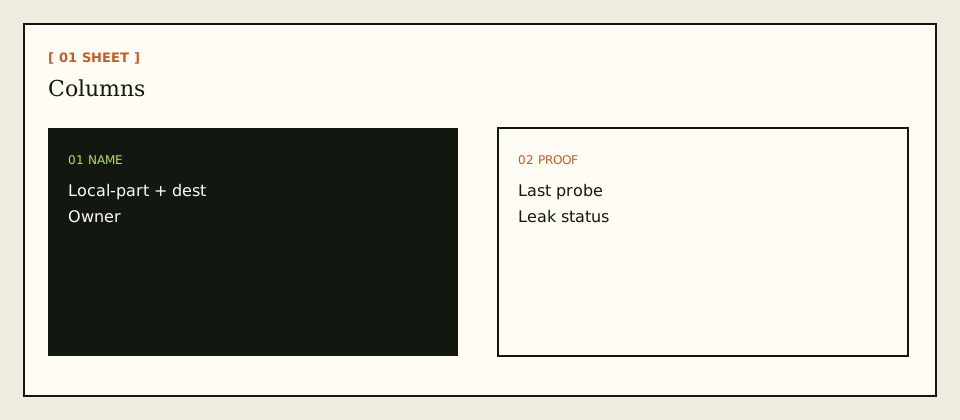
Manage many email aliases only if you can print them. Fifty custom domain aliases are a sheet: name, destination, reply owner, leak status, send-as, last probe. An email forwarding alias without a row is how you lose track. A role address without an owner is how you double-reply. Catch-all is not organization. MailerZ Agency’s ceiling exists so the sheet can grow. Leftover MX makes all fifty silent.
Quick answer for manage many email aliases
Keep a sheet. Create only named aliases. Hold unknowns. Probe brochure names after every MX change. Retire leaked vendor strings. That is manage many email aliases.
Free is ten. Paid raises the ceiling. Confirm pricing. Unlimited marketing will not organize you.
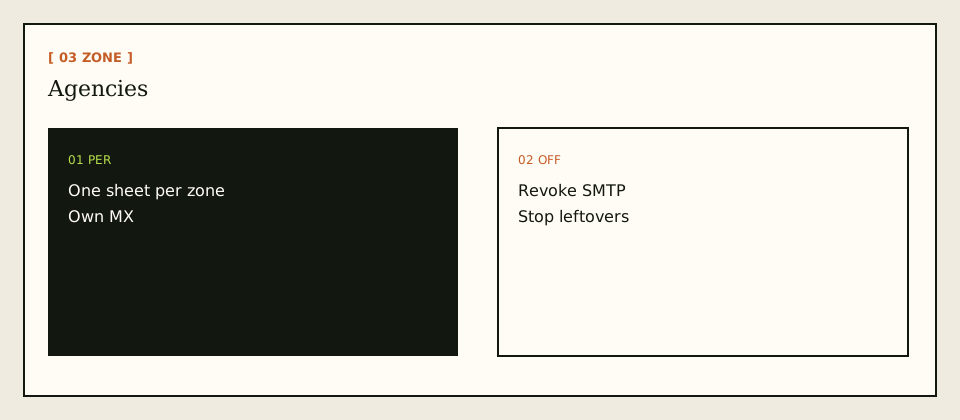
Per-domain sheets if you run clients. Per-domain leftover cuts.
Send-as column is yes/no per From, not a blanket.
MailerZ Free is one domain, ten aliases, one seat, a 14-day store, send-as disabled, SMTP and API disabled, and unrouted mail held or rejected only. Solo is $40 per year only. Starter is $8 monthly or $80 yearly. Business is $19 or $190. Agency is $39 or $390. Unlimited is $99/month or $990/year. Confirm numbers on MailerZ pricing. Limits are not an inbox-placement promise.
Google’s own Send mail as steps live in Google Gmail Help — Send mail from a different address. Workspace as a product is described on Google Workspace — product overview. Transport still follows IETF RFC 5321 — Simple Mail Transfer Protocol.
custom domain alias: the real decision
Fifty names in someone’s head.
Catch-all as the filing system.
One tab for every client.
Criteria: printable rows, hold, retire process, leftover review, probe habit.
| Column | Why | Failure if missing |
|---|---|---|
| Local-part | The public string | You print ghosts |
| Destination | Hop two | Wrong human |
| Owner | Who replies | Double answers |
| Last probe | Proof | Self-send theater |
Prove inbound from another mailbox before you print hello@ on a homepage.
Start free — one domainTechnical mail flow for manage many email aliases
Each row is a named RCPT TO. Hop two follows the destination cell. Header From stays.
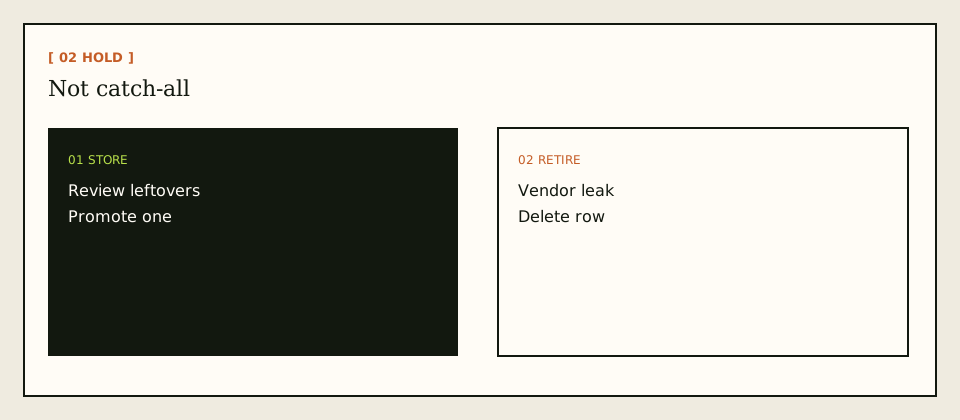
Unknowns are not rows. They are hold.
A leak sets retire. Delete or stop forward. Do not keep it because the sheet is long.
MX leftover zeros the whole sheet’s inbound.
MailerZ is inbound MX plus authenticated SMTP from Secuno LLC. Envelope SRS only. Header From, Subject, Date, Message-ID, body, and MIME are never rewritten. Not Google Workspace, not IMAP or POP, not an open relay. Unauthorized send is SMTP 550 / 550 5.7.1. Leftover MX is a hard stop. Self-send from Gmail to the same Gmail account can hide routing errors. Not SOC 2, not ISO 27001, not HIPAA.
email forwarding alias
Build the sheet before the fiftieth name.
- Create columns listed above.
- Enter brochure names first.
- Verify domain. Create those aliases.
- Exclusive MX. Delete leftovers.
- Probe brochure names from another mailbox.
- Add vendor-unique rows as you issue them.
- Weekly hold review. Promote or ignore.
- Quarterly leftover MX and SMTP revoke.
Failure modes and proof
Catch-all instead of rows.
No owner column.
Shared one SMTP for fifty Froms.
Self-send at scale.
Nameserver clone restored leftovers.
Leftover MX is the usual ghost. Check a public lookup before you blame Gmail.
Open leftover MX troubleshootingMailerZ workflow and product boundary
Ceilings on pricing. Related: aliases and catch-all, email alias service, custom domain email alias, pricing.
Store windows are hops this layer saw, not the sheet’s archive.
Related pages: aliases and catch-all, email alias service, custom domain email alias, and pricing.
role address
Agency exists when zones and rows are the job. Confirm pricing. A missing sheet costs more than Agency.
Help desk if fifty roles need assignment. The sheet will not.
MailerZ Free is one domain, ten aliases, one seat, a 14-day store, send-as disabled, SMTP and API disabled, and unrouted mail held or rejected only. Solo is $40 per year only. Starter is $8 monthly or $80 yearly. Business is $19 or $190. Agency is $39 or $390. Unlimited is $99/month or $990/year. Confirm numbers on MailerZ pricing. Limits are not an inbox-placement promise.
Field notes you can reuse
Probe all fifty only after an MX incident, not weekly.
Retire on leak the same week.
Two destinations need two owner notes.
Outlook dest: document it.
Do not reuse names across clients.
Hold is the overflow tray.
The role-without-seats page is why you did not buy users.
This page is how you do not drown.
Deeper field notes for manage many email aliases
Fifty names is a spreadsheet, not a feeling
Manage many email aliases only if you can print the list. Columns that matter: local-part, destination, reply owner, created date, leak status, send-as yes/no, last probe subject. If you cannot open that sheet, you are not ready for fifty. You are ready for three on Free and a hold policy. Agency’s 500-alias ceiling exists so the sheet can grow. It does not replace the sheet.
Group by purpose, not by whim: brochure (hello, support, billing), vendor-unique (stripe-2026, ads-fb), project, retire. Retire means delete or stop forwarding when the vendor leaked. Do not keep a leaked name live because the sheet got long.
Catch-all is not organization
Catch-all hides the missing rows. Harvest fills Primary. Two destinations on catch-all trains two spam buttons. Hold unknowns. Review the store. Promote one leftover when a human used it. That is organization. Unlimited as a vibe is not.
Per-domain sheets for agencies
Do not pour every client into one tab because the workbook got wide. Per-zone MX, per-zone list, per-zone SMTP. A leak on client A should not rename client B. Offboard deletes MX you own, revokes SMTP, and stops leftover forwards into the agency inbox.
Probes at this scale
You will not probe fifty names every week. Probe printed brochure names after every MX change. Probe a vendor-unique name when you create it. Probe a retired name once to confirm it is dead. Unique subjects. Other mailbox. Self-send still lies at n=50.
If leftover MX returns after a nameserver clone, fifty aliases will not save you. Hop one is still Google. Quarterly leftover review is the organizing habit that matters most.
A complete worked story
The tab nobody opened
An agency had 80 aliases in a dashboard and no sheet. A leak on ads@ sat live for months. They built columns, retired the leak, held unknowns, and probed brochure names after a Cloudflare NS move restored leftover Google. The dashboard did not organize them. The sheet did.
Operator brief
A longer operator brief for manage many email aliases
Teams that bookmark How to Organize 50+ Email Aliases Without Losing Track usually arrive after a missed invoice, a form that never notified anyone, or a migration that looked clean in one resolver. The useful brief is still boring. Name the store. Name the printed local-parts. Name the nameservers that actually answer. Publish one MailerZ MX set. Delete leftover hosts. Probe from a mailbox that is not the destination. Only then talk about manage many email aliases as a send-as, catch-all, or comparison problem.
MailerZ remains inbound MX plus authenticated SMTP around Gmail or Outlook. Envelope SRS only. Header From, Subject, Date, Message-ID, body, and MIME stay intact. It is Mail Box portal webmail, not IMAP, not POP, and not an open relay. Unauthorized send is 550 / 550 5.7.1. Free cannot finish send-as: SMTP and API stay off. Solo is $40 per year when the domain From must travel. Starter is $8 or $80. Business is $19 or $190. Agency is $39 or $390. Unlimited is $99/month or $990/year. Confirm the live pricing page. Those numbers are ceilings, not an inbox-placement service-level agreement.
If leftover Google, Microsoft, Cloudflare routing, or registrar MX is still public, stop widening manage many email aliases. The map you built never saw that copy. Priority numbers are an order, not load balancing. A higher preference host is idle while a leftover host still accepts mail. Save the old MX set before you delete anything. Check more than one public view because TTL lies.
Catch-all forward is not a safety feature for how to organize 50 email aliases without losing track. Hold unknowns on everyday production. Review the store. Promote a leftover only when a real person used it. Paid forward belongs to a dated cutover. Fan-out of unknowns into two inboxes trains two spam buttons. Plus addressing on Gmail is not a custom-domain unknown policy. MailerZ will not strip plus tags on your domain the way Gmail does on @gmail.com.
Send-as is a second hop. Creating an inbound alias does not approve outbound. Catch-all does not mint a From. Copy the dashboard host, port, and TLS pair together. Set From to an identity you created. Do not paste a Gmail password into a CMS, a cron file, or a ticket. Do not mail SMTP secrets to support. Send a 550 line, a timestamp, and a Message-ID. Rotate if a secret already leaked.
Self-send from Gmail to the same Gmail account can short-circuit. That green result is why people swear manage many email aliases works while customers vanish. Use a second provider. Put a unique subject on the probe so delivery history is searchable. If Header From was rewritten by some other forwarder, authentication stories get noisier. MailerZ does not rewrite Header From on inbound.
Agencies should keep manage many email aliases per client zone. Separate SMTP credentials. Do not pour every client into one catch-all because the spreadsheet got long. Agency plan capacity exists so you can hold more domains and aliases. It does not replace a named list. Offboard means delete MX you own, revoke SMTP, and stop forwarding leftovers into the agency inbox.
Legal and security questions have published answers on the security, privacy, terms, DPA, and subprocessors pages. MailerZ is not SOC 2, not ISO 27001, and not HIPAA. The 14-day Free store, the 90-day Solo–Agency store, and the 180-day Unlimited store are recovery windows for hops this layer saw. They are not an archive and not legal hold. If counsel wants eDiscovery, buy eDiscovery.
Comparisons only help after the hop is honest. Cloudflare Email Routing is inbound routing. A privacy-mask product hides a destination on a provider domain. A suite hosts mailboxes, Calendar, and admin. Proton-class mailboxes encrypt a store. MailerZ is the delivery layer when you already have Gmail or Outlook and you need a domain route you can prove. Cite the other product’s documentation. Do not invent feature parity.
When How to Organize 50+ Email Aliases Without Losing Track is closed, the next physical action is a lookup and a probe, not another tab. Start free on one domain you can break. Sign in if the zone already lives here. Review quarterly, or sooner after a nameserver move, a plugin swap, or a staff departure. That is how manage many email aliases stays a runbook instead of an incident.
A second worked pass for manage many email aliases: write the last change on a sticky note before you open the dashboard. Nameserver move, leftover MX, new form plugin, contractor laptop, or a registrar forwarding toggle are the usual five. MailerZ history only shows hops that reached this layer. If the sticky note says leftover MX, you do not have a manage many email aliases mystery. You have a split. Delete the leftover. Wait for TTL. Probe again.
A third worked pass: print the public list. If you cannot print it, you are not ready for production unknowns and you are not ready for a bigger alias ceiling. Unlimited aliases as marketing will not save a missing list. Three named aliases on Free are enough to stop printing a personal Gmail on a homepage. Grow the list when a real person used a leftover, not when a harvest guessed admin@.
More working detail
A weekly fifteen minutes that beats a yearly archaeology
Open hold. Promote or ignore. Check brochure names still match the homepage. Check leaked vendor rows. Manage many email aliases is that quarter-hour, not a heroic weekend. If hold is a waterfall, your site is printing names you did not create. Fix the site or create the names. Do not enable catch-all to drain the waterfall into Primary.
Once a month, revoke SMTP for people who left. Once a quarter, two public MX views per zone. Those two habits keep fifty rows honest. The dashboard sort order will not.
Naming conventions help the sheet: role-*, vendor-*, proj-*. Do not encode secrets in the local-part. Do not reuse a retired vendor name for a new vendor. Leaks follow names, not intentions.
If you cannot recite the brochure subset, the sheet is already too clever. Put brochure rows at the top. Vendor-unique rows below. Retired rows at the bottom, dated. Fifty is fine when the top five are obvious.
When fifty means you wanted a help desk
If fifty roles are fifty humans who must assign tickets, buy a desk and point one alias at it. The sheet will not become Jira. Aliases without seats are still the right inbound design. The desk is hop two’s destination, not a reason to buy fifty Google users.
One more working distinction
Ownership when the sheet is shared
One editor. Manage many email aliases dies when five people add rows and nobody deletes. The editor runs the weekly hold review. Everyone else files a request. That sounds stiff. Fifty rows without it become eighty ghosts.
Put the editor’s name on the runbook next to the leftover-MX owner. They can be the same human. They cannot be “the intern this month” without a handoff.
Export the sheet when someone leaves. The dashboard is not a backup of intent. The owner and leak columns live in the sheet.
A short operating rule
Color is not a system
Dashboard stars and colors die when the next human arrives. Manage many email aliases with columns you can export to CSV. If it is not in the sheet, it is not organized. Pretty UI is a viewer, not a system of record.
Date the last MX review on the sheet header. If that date is older than a nameserver move, you are not organized. You are lucky. Luck ends.
When you hit the plan ceiling, stop adding pretty names. Upgrade or retire. Do not catch-all the overflow. The sheet should show the ceiling so marketing cannot add row fifty-one on Free.
Field close
Retire workflow in four clicks
Mark leak. Stop forward or delete the alias. Note the date. Tell the vendor a new unique name if you still need them. Manage many email aliases is that loop. Keeping the leaked name “just in case” is how the sheet lies. The old name can sit in hold if you want to see who still writes it. Do not let it into Primary.
Do not reuse the leaked string later. Reputation follows the name. Issue vendor-2027, not the same token.
Last operating note
If a row has no last-probe date and no leftover review date, treat it as unverified. Manage many email aliases means unverified rows do not go on a homepage. Probe them from another mailbox or take them off the site. Self-send does not count as a date.
Agencies: a missing probe date on a client brochure name is a cutover risk. Fix it before you invoice “email included.”
One last line
Print the sheet before a nameserver move. Manage many email aliases through a clone by comparing that print to the new zone. Templates love leftover Google. Your fifty rows will not save hop one. The print will.
After the move, probe brochure names only, not all fifty, unless history is empty. Empty history is leftover, not a reason to recreate the sheet.
Close the gap
If two humans edit the sheet, you will get two jobs@ rows. Manage many email aliases with a single editor and a request queue, even if the queue is a chat thread. Merge duplicates the same week. Probe the survivor. Delete the ghost.
Ghost rows are how leftover MX stories start: someone thinks the name exists, prints it, and hop two never had it. Hold then looks like delay. It is a missing row.
Final distinction
Recite the brochure five. If you cannot, the sheet is too clever. Manage many email aliases starts with those five on top. Everything else can wait a week.
Fifty named aliases is a Starter-sized sheet, not a catch-all. MailerZ Free stops at ten. Solo is 25. Starter is 50. Business is 200. Agency is 500. Unlimited is uncapped. Confirm pricing before you promise a fifty-row brochure. A sheet that lists sixty printed names on Free will fail at alias sixty-one, not at DNS. Size the plan to the printed inventory, then HOLD everything you did not print.
Ownership beats clever local-parts. Each row needs a human who can say whether the name is still printed, who reads it, and when it can die. A fifty-row sheet with no owners is how leaked shop@ lives forever. Pause the alias. Do not reprint the brand. Do not turn the leftover names into Forward unknowns “so we never miss a typo.” Probe the survivor after every merge.
FAQ
- What is the safest way to handle manage many email aliases?
- Keep a printable sheet of named aliases, hold unknowns, retire leaked vendor names, probe brochure names after MX changes, and keep per-zone lists if you run clients. Catch-all is not a filing system.
- Does this require a new mailbox?
- No. MailerZ is Mail Box portal webmail (Inbox, Sent, New email). It is not IMAP or POP. Gmail or Outlook remains the store unless you separately buy a hosted mailbox product.
- Will it work with Gmail or Outlook?
- Yes for inbound when the destination is a verified mailbox. Branded replies need paid send-as plus Gmail Send mail as or a manual Outlook SMTP identity. Free has no send-as.
- What DNS records are involved?
- A verification TXT, one MailerZ MX set on the authoritative nameservers, leftover host MX removed, and SPF, DKIM, and DMARC if you also send as the domain.
- What should I test before production?
- Send a uniquely titled message from an unrelated provider into each named alias. Confirm Header From and delivery history. Do not email yourself from the same Gmail account.
Key takeaways
- Print the sheet.
- Hold unknowns.
- Retire leaks.
- Owner per role.
- Probe after MX.
- Per-zone if agency.
- No catch-all filing.
- Ceilings are real.
Conclusion and next action
Organize 50+ aliases with a sheet and a hold policy, not with catch-all. MailerZ will map what you named. Leftover MX is still a hard stop for the whole list.
Start free. Sign in if the sheet exists and public MX is still the old host.
Print the list first
Start free on three names. Grow the sheet when leftovers are real people.
Do not open catch-all to skip the sheet.
Review quarterly, or sooner if Gmail, Workspace, or MailerZ scope changes. Author: MailerZ editorial, Secuno LLC.